
In remote areas of conflict, where access to hospitals and labs is limited, diseases like malaria, dengue, and leptospirosis pose a serious threat. These diseases present with a vague set of symptoms that can often be misdiagnosed, delaying timely, vital treatment. In many cases, the military must evacuate soldiers from combat areas for testing and treatment, which can delay missions, exhaust time and resources, and endanger military personnel.
To fill the void of reliable and rapid testing for a range of infectious diseases in remote combat areas, a team of MSIL students in the Center for Leadership Education has developed a rapid, multi-pathogen diagnostic, called IRIS, that can run on-site without lab equipment, electricity, or trained technicians.
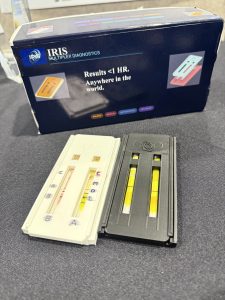
The IRIS prototype
“IRIS was built around a simple but urgent need to make critical diagnostic decisions possible in places where lab infrastructure does not exist. Instead of using multiple single-disease tests or relying on complex equipment, IRIS brings a multiplex approach into one portable system,” said Laxmi Sahithya Udtha, IRIS lead scientist and student in the MS in Global Innovation and Leadership through Engineering (MSIL) program.
The team’s multiplex diagnostic system detects common pathogens in a single kit, allowing on-site technicians to quickly diagnose a variety of diseases, including malaria, dengue, COVID, leptospirosis, and influenza A & B using blood or a nasal swab within an hour.
The team recently won first place in the Healthcare Ventures category ($5000) at HopStart 2026 and the Media Spotlight Award ($1000) at Design Day. Read more about their journey on the Center for Leadership Education’s website.